
Batch-level warehouse control with QR codes
Nine modules: receiving, identification and labelling, location control, batch and expiry control, picking and despatch, cycle counting, traceability and recall, audit records, reporting and integration. You take the modules you need and configure them to the way your own site works.
The international name: a warehouse management system (WMS) with batch control and FEFO — first expired, first out.
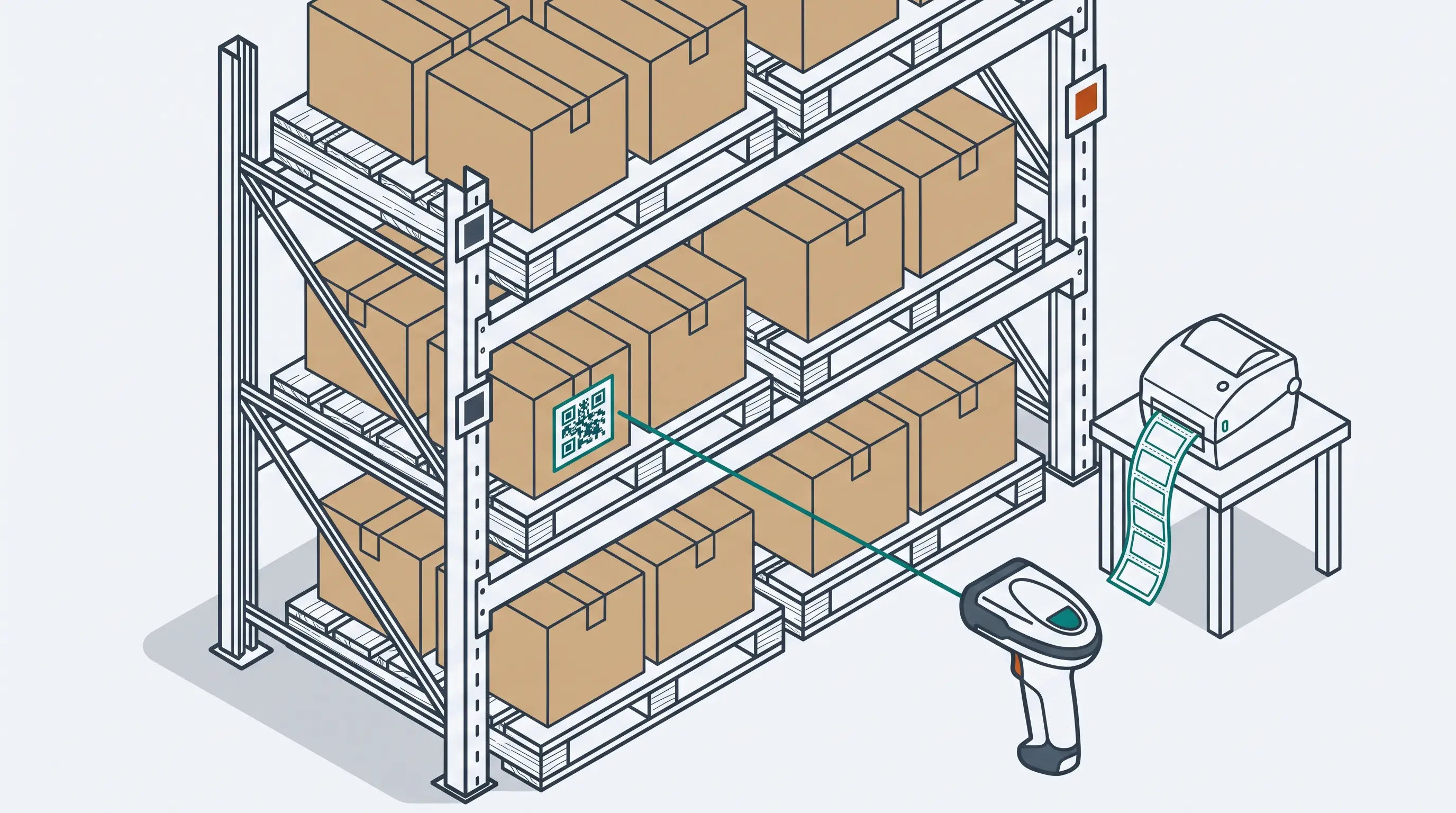
Coding goods in a warehouse is not new, but until now it was an internal choice. Decree 37/2026/ND-CP turns traceability into a requirement with a timetable: an organisation’s internal traceability system has to be able to connect and share data with the regulator’s, fully applicable from the start of 2027.
Traceability data is only correct when it is produced as the work happens. A warehouse still working from notebooks will be rebuilding the record for each batch every time it is asked for — and that is a job that is never finished in time.
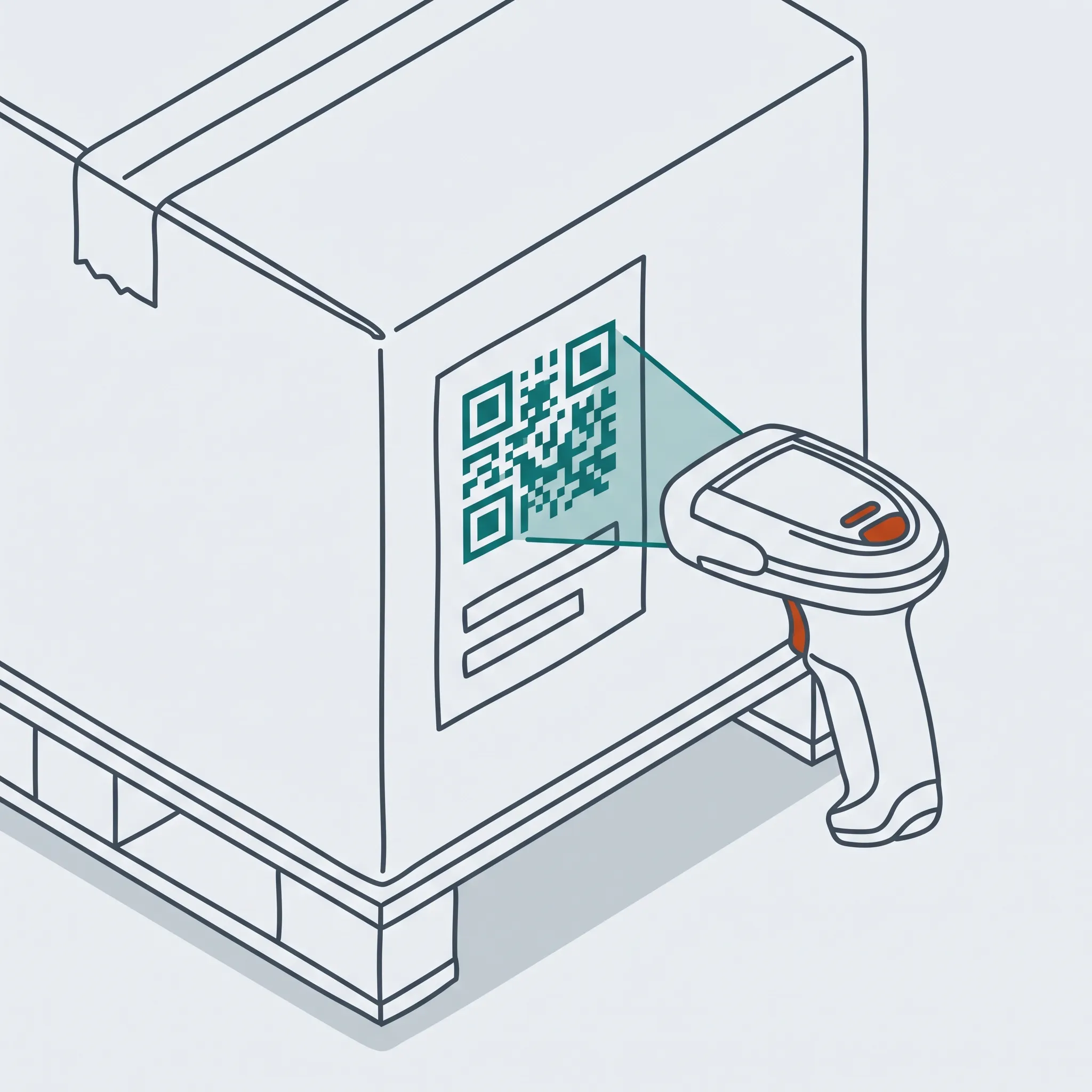
Nine modules
Each module stands on its own. Most sites start with identification and batch stock control, because everything else rests on those.
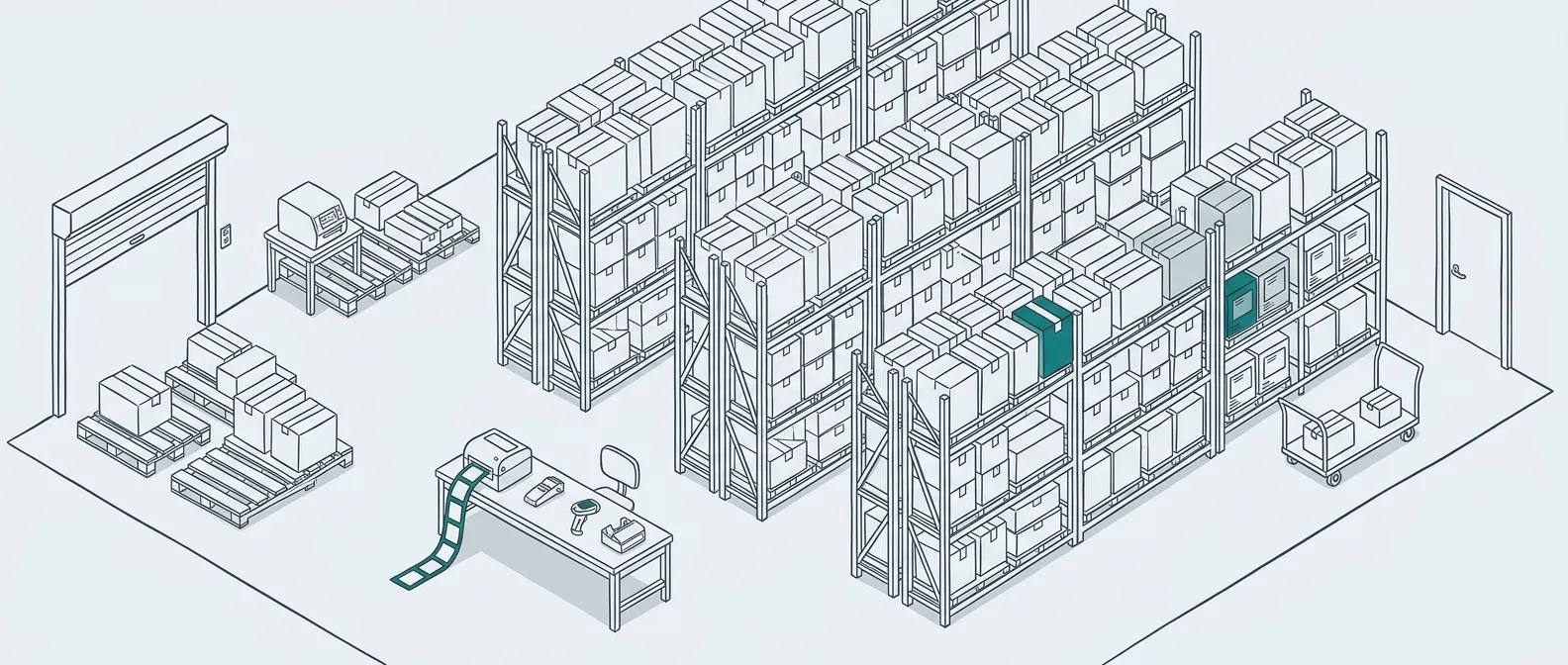
- Goods checked against the order while they are being received, so shortages and overages surface on the spot
- Awaiting quality inspection sits on the batch itself, and a batch that has not been released cannot ship
- Storage conditions recorded at receipt for goods with temperature requirements
- Codes built on the GS1 structure: product code, batch number, expiry date, shipping container code
- Labels printed at the receiving point, in QR or linear barcode
- Print quality graded so labels do not fail to scan later
- Where a supplier already applies a compliant code, it is read and reused rather than overprinted
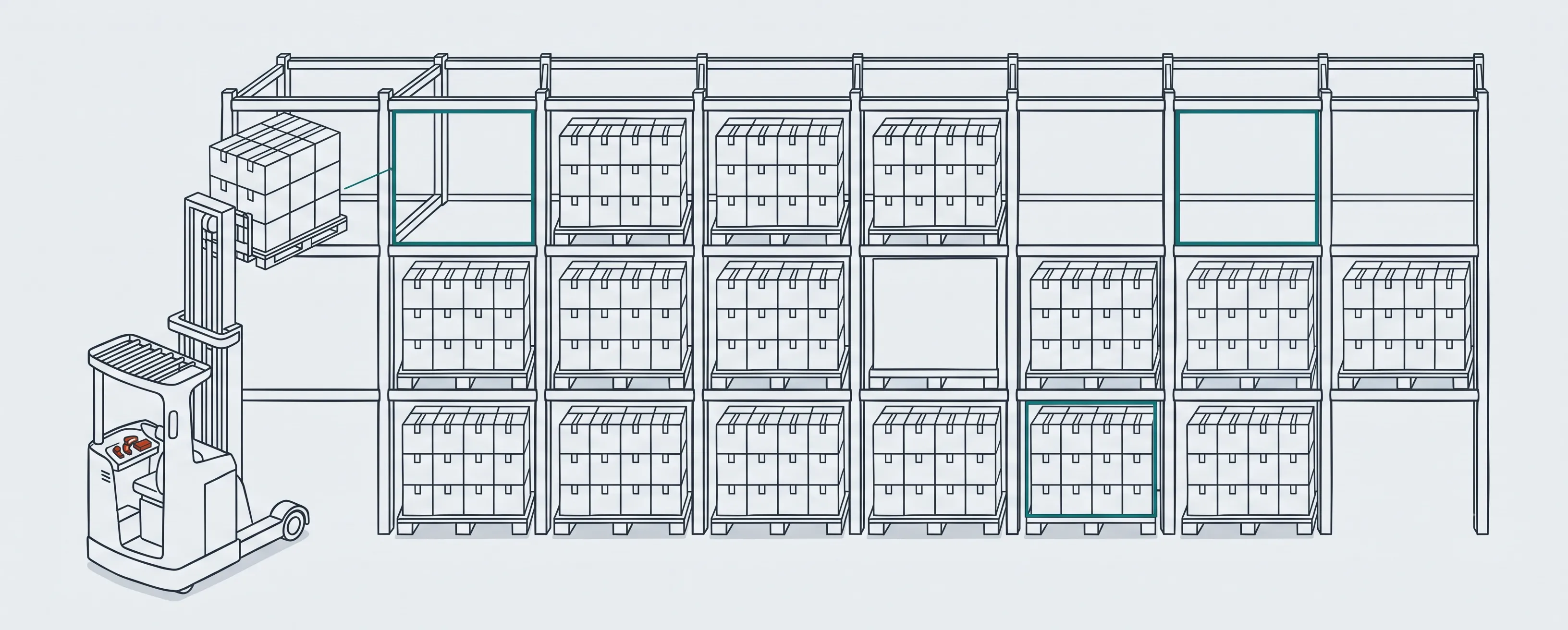
- A map of the warehouse down to the individual rack slot, each location with its own code
- Put-away suggested by rules you set: pick frequency, load rating, temperature zone, goods that must not be stored together
- The nesting of case, pallet and location kept current with every movement
- Stock visible by batch, by expiry date, by quality status and by location
- Alerts before a batch reaches its date, at as many thresholds as you want
- Batches blocked when quality is in doubt, with quarantined and returned goods kept separate
- Batch selected first-expired-first-out or first-in-first-out, configured per product group
- Every case scanned to confirm, with an immediate error if the wrong batch or wrong item is picked
- Loads assigned to a delivery run from a phone, and closed off when complete
- The receiving party scans to confirm, and any discrepancy shows down to the individual case
- Counted area by area while the warehouse keeps working, with no need to stop movements
- Count frequency scheduled by value classification
- Discrepancies recorded and approved at the right level of authority
- Forward and backward tracing on the one step back — one step forward principle
- From a single case code to the batch, supplier, receipt date, inspection result, and who received it and when
- Recall rehearsals and mass balance for a batch, exported as a record
- Who did what and when, recorded automatically, with no way for a user to switch it off
- Records cannot be edited once created; every change adds a new record with its reason
- Role-based permissions and electronic signatures where approval is required
- Built for the periodic audit trail review your quality function has to carry out
- Two-way exchange with your ERP through a web service interface
- Data exported in the structure a regulator or a customer asks for
- Scanning keeps working when the connection drops, and syncs once the network is back
What this system is for, beyond the audit
Satisfying an assessor is the necessary part. What actually gets the investment approved is usually one of the seven points below.
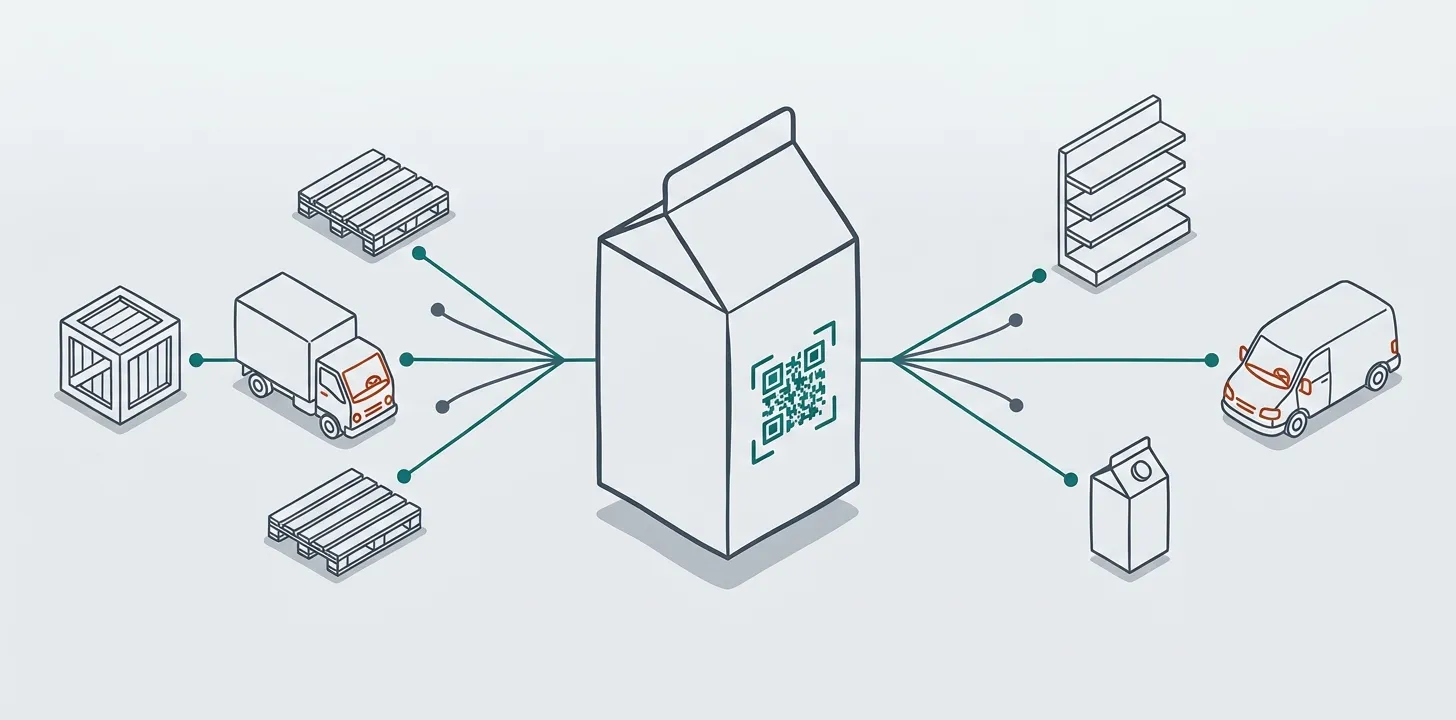
Vietnamese operations are a different size, so the absolute numbers do not transfer. What does transfer is the structure: most of the damage in a recall is not the cost of the recall itself, it is the interruption to the business and the scope being wider than it needed to be. We quote them so you have a reference point when estimating for your own site, not as a saving we are promising.
What becomes measurable
How much improves depends on where each warehouse is starting from. What the system guarantees is that the figures below become daily measurements instead of impressions.
What an assessor asks for
The standards below come down to the same group of requirements: records that are complete, tied to a person and a time, impossible to alter after the fact, and producible within a set time.
| Standard or regulation | Relevant requirement | What the system supplies |
|---|---|---|
| GSP — good storage practice for medicines | Complete and accurate records, every storage activity traceable; receipt and issue by batch number and expiry date | Stock managed to batch and expiry, an electronic record per operation, and records exported for the audit |
| Data integrity — ALCOA+, EU GMP Annex 11, 21 CFR Part 11 | An automatic, time-stamped audit trail that users can neither disable nor alter, and that is reviewed periodically | An activity log built to exactly that principle, role-based permissions, electronic signatures, and a screen made for the quality function’s review |
| TCVN 12850:2019 and the GS1 system | Product identification, batch or serial number; one step back — one step forward; key data elements available | Codes structured to GS1, traceability data stored as events, forward and backward tracing in minutes |
| Decree 37/2026/ND-CP on traceability | An internal traceability system must connect and share data with the regulator’s system through a programming interface, fully applicable from 1 January 2027 | Traceability data normalised during ordinary operation and exportable in the required structure, so no separate file has to be assembled when the deadline arrives |
| ISO 22000, BRCGS and food safety schemes | A traceability exercise and mass balance completed within a set time, commonly 4 hours | Trace rehearsals and mass balance for a batch run against live operating data and exported as a record for the assessor |
| ISO 9001 — quality management | Clause 8.5.2 identification and traceability; control of records | Every case carries its own identity linked to its whole handling history, with records retained for the period you set |
Configured per warehouse
No two warehouses run the same way. The points below are parameters, settled during the survey rather than fixed in the software.
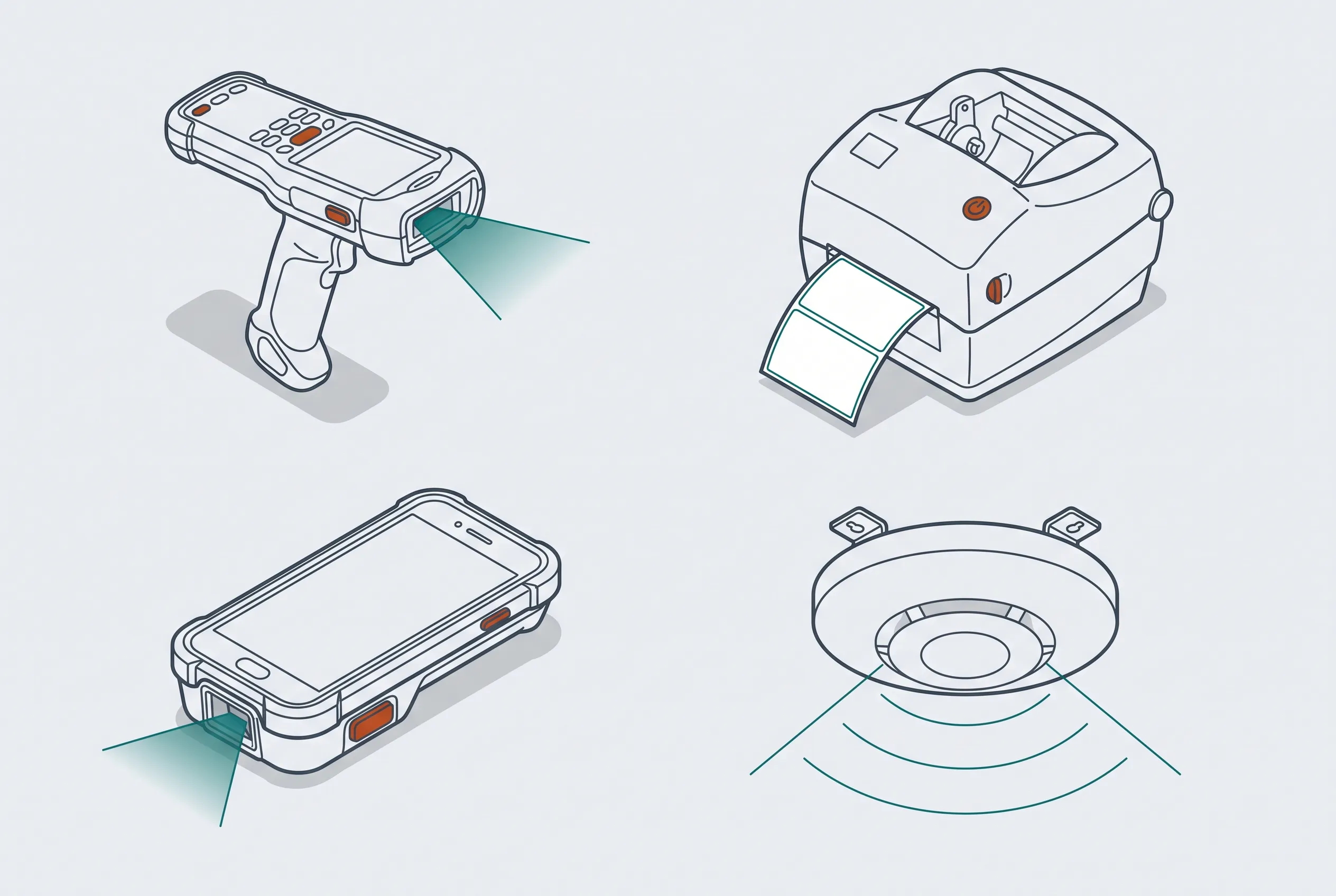
Equipment and infrastructure to prepare
| Item | What to watch when rolling out |
|---|---|
| Handheld scanners or phones | Purpose-built devices for high-intensity picking areas; Android phones are fine for counting and assigning delivery runs. |
| Label printer | Put it at the receiving point so labels are printed and applied there. Printing centrally and carrying labels out is a common source of error. |
| Label stock suited to the environment | Cold stores, humid stores and carton surfaces all need different adhesives and materials. A label that falls off breaks the whole data chain. |
| Wireless coverage down every aisle | Dead spots between tall racks are the usual reason staff stop scanning. Survey the coverage before rolling out. |
| Server on site | Data stays inside the business, and the system keeps running when the external connection drops. |
Where codes printed on packaging are already blurred, scratched or distorted, see the tool for reading codes on poor surfaces — you can try it on a photograph of a real label from your own warehouse.
- Certification against the standards above is granted to an organisation after an assessment body has reviewed the whole management system. It is never granted to software. The software supplies the evidence and records an assessor asks for; the process, the people and the condition of the building remain yours.
- Warehouse software does not replace accounting software. It manages the physical state of the goods and returns the figures to your management system.
- The system is only as accurate as the labelling done at receipt. That is a change in working habits, and it needs training and supervision through the first period.
- Torn, dirty or overlabelled codes will not read. Every design includes a manual path that records who used it and why.
- Wrong data arriving from your management system is recorded faithfully as it arrives. The system detects differences between the books and the floor; it cannot detect an order that was wrong at source.
Questions we are asked
What is this kind of system called internationally?
A warehouse management system, or WMS. The large platforms all sell it as modules: receiving, put-away, stock control, picking, cycle counting, traceability and reporting. What separates the products is the depth of each module and how much of it can be configured, not the list of features.
Our warehouse works its own way and packaged software does not fit. What then?
That is why the system is built as configurable modules rather than one fixed sequence of operations. Issue rules, depth of identification, inspection points, approval levels and put-away rules are all parameters. Anything beyond what configuration covers is developed, and that is established during the survey.
What does this give us for a GSP or food safety audit?
An assessor concentrates on evidence: whether records are complete, whether they can be altered after the fact, whether they are tied to a person and a time, and how quickly they can be produced. The system provides an automatic activity log that cannot be switched off, records per batch, and the ability to complete a trace with its mass balance during the audit itself.
How does Decree 37/2026/ND-CP affect our warehouse?
It requires an organisation’s internal traceability system to be able to connect and share data with the regulator’s system, fully applicable from the start of 2027. In practice that means traceability data has to be produced during daily operation. A warehouse still working from notebooks will be assembling records batch by batch when the deadline comes.
What is the difference between issuing by expiry and by receipt order?
First-in-first-out ships what arrived first. First-expired-first-out ships what expires first — and the two differ whenever batches arrive out of expiry order. For pharmaceuticals, food and chemicals, first-expired-first-out is the correct rule.
Where is the warehouse data held?
On a server at your own site. We keep no copy of your operating data, and the system does not need an internet connection to run.
Related: RFID vehicle gate and weighbridge management — the modules that come before this, handling goods while they are still on the vehicle. How we work and the budget bands are on software built to requirement.
Talk to us about your warehouse
Tell us where you are: floor area and number of rack locations, what kind of goods and whether they carry expiry dates, movements per day, what management system you already run, and which standards you have to maintain. An engineer will call you back to work out which module to do first and which budget band it falls into.
- A straight answer on feasibility during the call
- The budget range that matches your requirement
- An engineer who has built this kind of system before