
Software built to your requirement
The demonstration tools on this site cover the common part of the problem. Most of the work we take on is the part that is specific to one site: an older machine, a process of its own, a report only your organisation uses — the requirements a large supplier answers with “that is not in our product”.
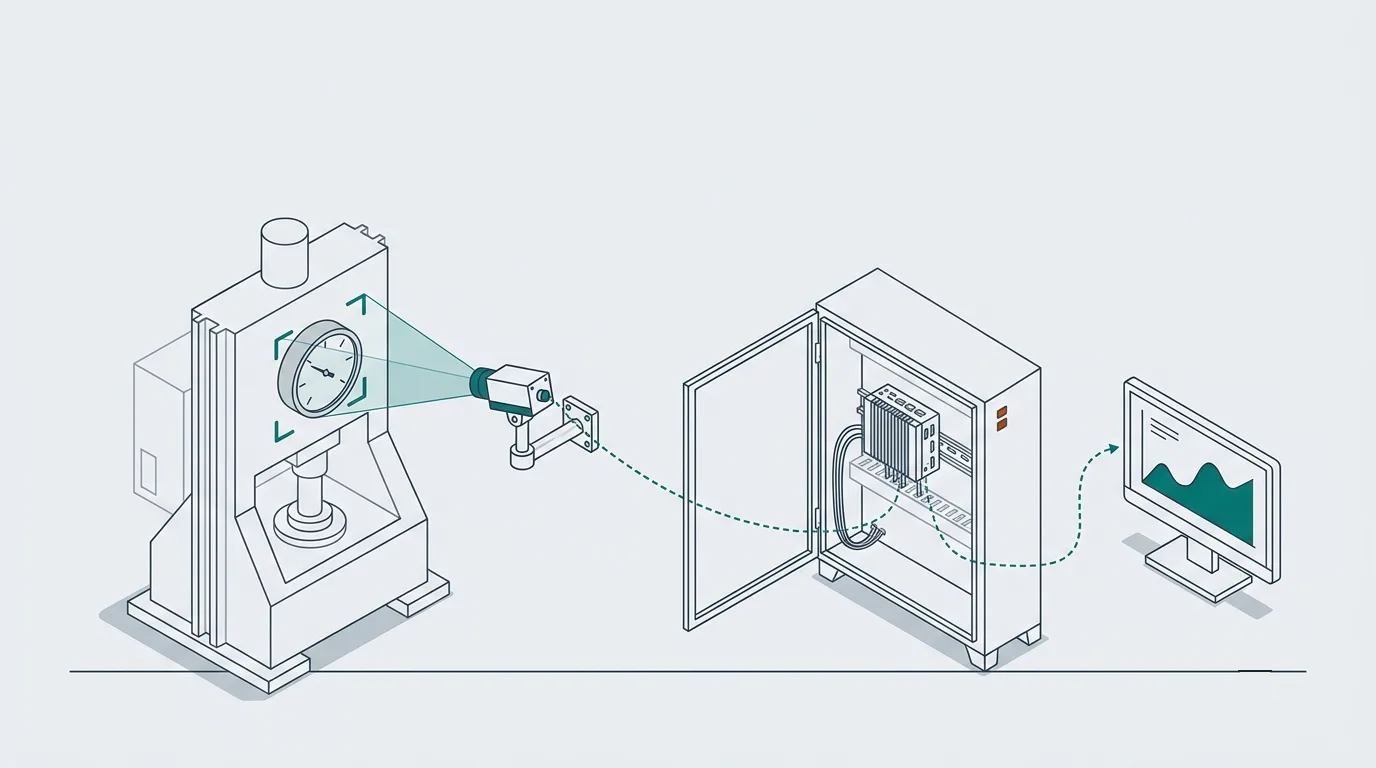
The tools under AI tools are demonstrations, enough to show you the kind of problem we handle. What a delivered system achieves depends on conditions at your site and is established by the survey.
We do not build a private trial system before a contract is signed. Lighting, mounting positions and the objects themselves differ from site to site; something built away from your floor does not tell you what the result will be there, so it does not help you decide. Proving it on your own equipment is what the first delivery stage is for — smallest possible scope, accepted on figures measured at your site.
Three bands by scope of delivery
What each band covers is set out openly. The matching budget range comes with the call.
| Band | Typical scope | Budget range |
|---|---|---|
| Extending what you already run | One measuring point, one step of the process, reusing a core that already exists | ••• – ••• |
| One complete station | Camera or sensors, an industrial computer on site, operating software, and integration with the equipment you have | ••• – ••• |
| A system across several points | Several lines or several areas, integration with ERP or your management software, reporting brought together in one place | ••• – ••• |
Leave a number and the reference ranges appear straight away. An engineer will call you back to place your requirement in the right band.
These are reference ranges based on projects of similar scope, not a quotation. The final figure depends on the state of the equipment and how much integration is involved, and is only settled after the survey. If a requirement sits below the lowest band, we say so on the first call.
What we build
How we work together
The first three steps cost nothing and happen entirely at a distance. Cost begins at the fourth step, and that line is drawn before you decide anything.

- 01 Place your own requirement and budget Free you · 5 minutes
Read your requirement against the reference bands above and try the tools on this site yourself. If the level of investment is not right for you at the moment, you know that before speaking to anyone.
- 02 A call with an engineer Free engineer · 20 minutes
The person you speak to is the engineer who would build the system. The call answers one question: is this feasible. If it falls outside what we do, or a commercial product already covers it at lower cost, we say so on the call.
- 03 Remote assessment Free engineer · 1–2 days
You send photographs or video of the situation as it stands, along with the equipment details. We come back in writing with how feasible it is, the main technical risks, and the budget band it falls into.
- 04 Site survey and technical file Paid paid · 1 week
Cost starts here. We come to the site, measure, check the installation conditions, and hand over a file containing the technical approach, the equipment list, the schedule, the quotation and the accuracy we are prepared to commit to. The file is yours whether or not you go ahead.
The fee is set after step 3 and told to you before you decide. It is credited in full against the contract value if the project goes ahead.
- 05 Delivery in stages Paid per contract
The first stage is deliberately the smallest scope that proves the system works at your site, accepted on real figures. Rolling it out further happens only after that stage passes. Payment follows the acceptance milestones.
- 06 Handover and warranty Paid 12 months
Operator training and technical documentation handed over. Faults fixed at no charge during the warranty. The source code written specifically for you belongs to you.
Describe the problem at your site
The more specific the better: what equipment is involved, which step is being done by hand, the volume per day, and what the current error rate costs you. An engineer will call you back to establish whether it is feasible and which band above it falls into.
- A straight answer on feasibility during the call
- The budget range that matches your requirement
- An engineer who has built this kind of system before